St. Paul UMC History
Founding, Denomination, and Growth
St. Paul was founded in 1866 at the corner of Cove Point and H G Trueman roads. St. Paul is an outgrowth of St. John Methodist Episcopal Church on Sollers Wharf Road, which is now St. John United Methodist Church.
The congregation at St. Paul was chartered as a Methodist Episcopal Church South after being denied a charter in the Methodist Episcopal Church (note that the ME Church and the ME Church South were two different denominations at the time). During the early 1900s, St. Paul was part of a four-point charge with Huntingtown, Emmanuel, and Central churches.
In 1939, the three branches of Methodism merged to form the United Methodist Church of today. St. Paul was brought along and added to the Solomons–Olivet Charge.
Many United Methodist churches recently left the UMC and became Global Methodist churches due to the culmination of a long-standing doctrinal dispute primarily revolving around the acceptability of homosexuality. During this process St. Paul elected to remain with the UMC in favor of open affirmation of all our diverse community members. Today St. Paul remains part of the Baltimore-Washington Conference of the United Methodist Church.
The Campus
The original St. Paul Church building was a log structure that stood in the area of the cemetery now occupied by large cedar trees. 18 years later the church (as a people) was outgrowing the log building so a new frame building was constructed right over the log structure, which was dismantled and carried out the door piece by piece.
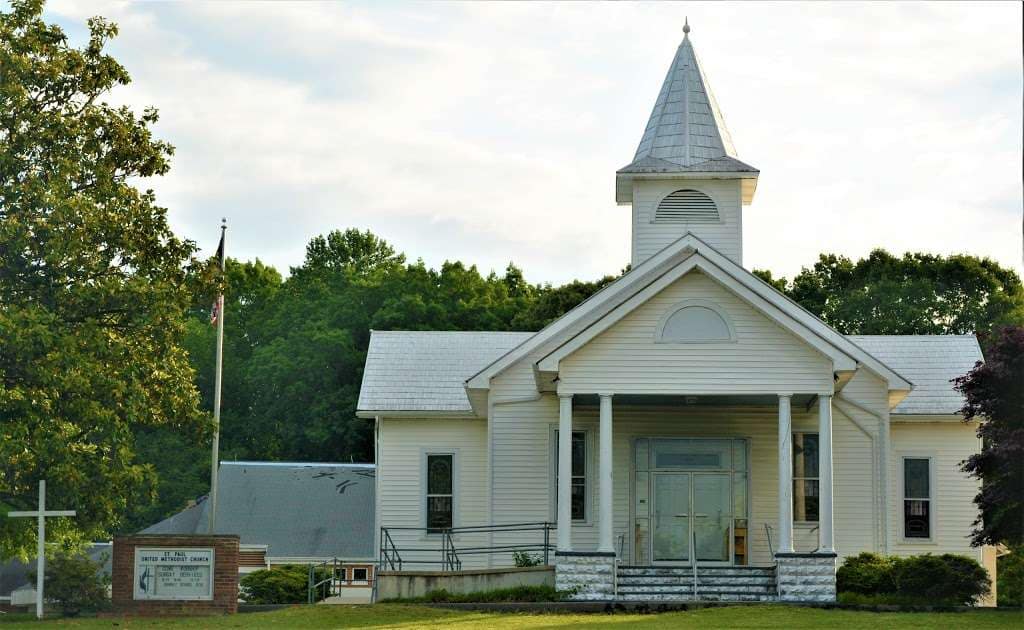
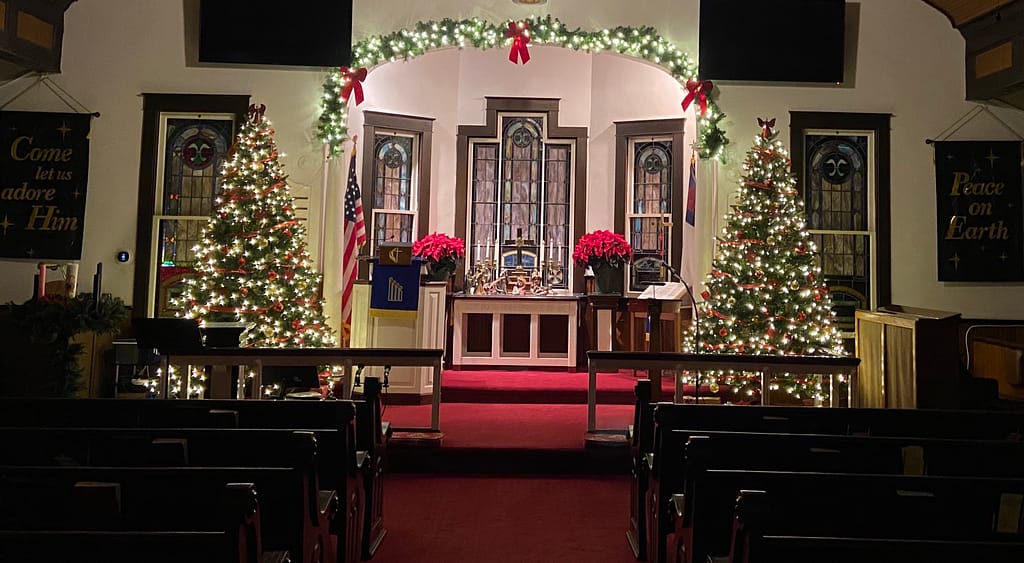
In 1930 a new building, the sanctuary we have today, was constructed and the old one was torn down. The new structure and its furnishings cost $8,000 (equivalent to about $153,000 today).
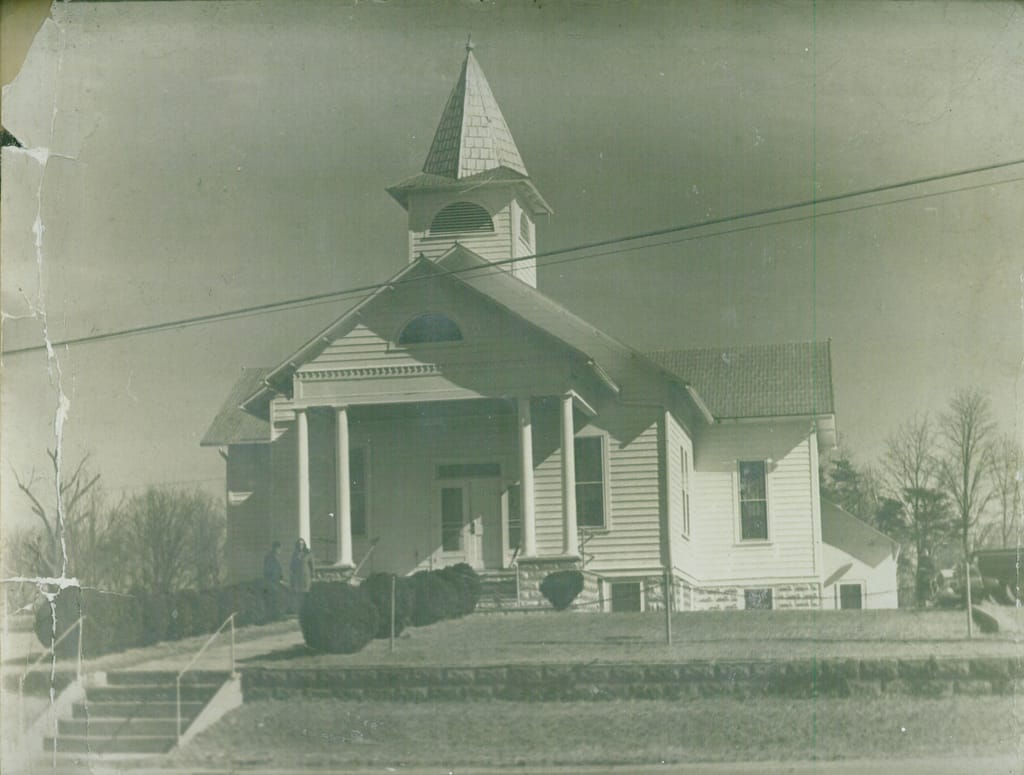
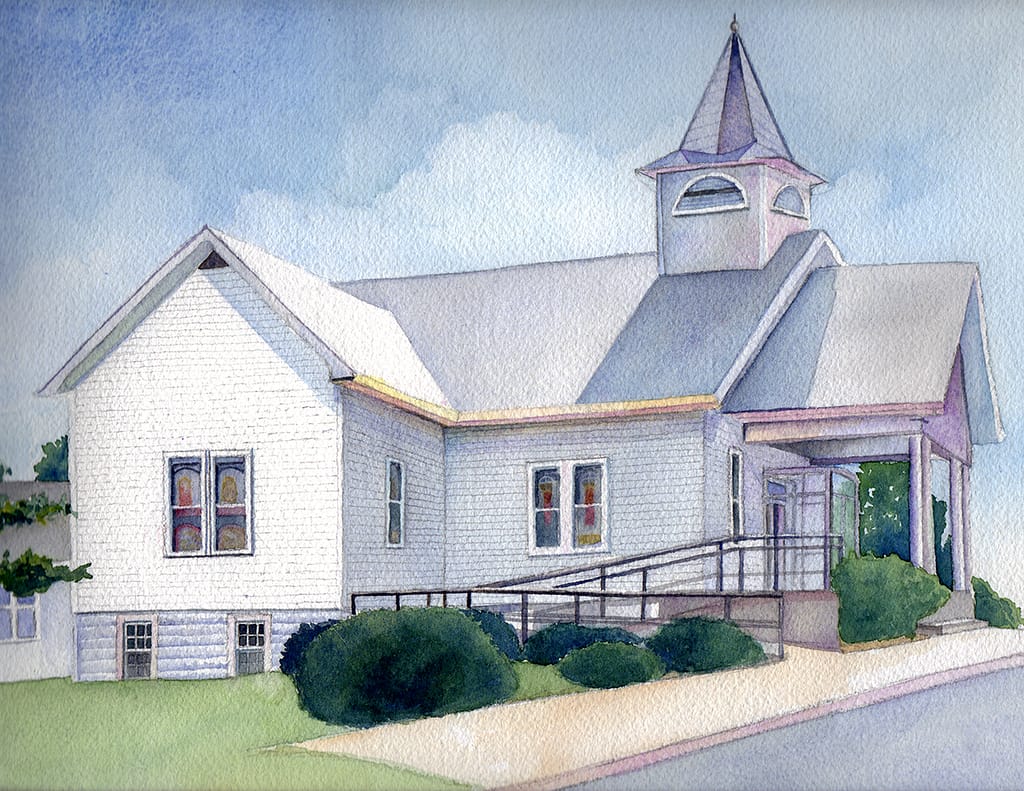
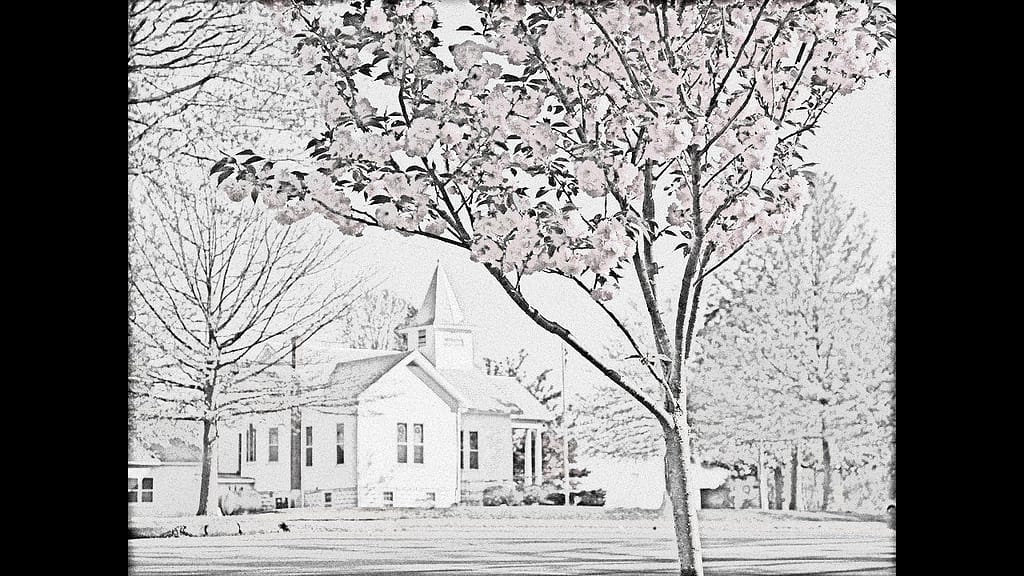
In 1951 a ground-level extension (the sanctuary sits well above ground level) was added to the back (northeast side) of the sanctuary building. That extension is now the “old” fellowship hall which is primarily used for group meetings.
In 1965 the T. Rayner Wilson Building was constructed north of the sanctuary building. It served as the church’s education facility until the CLC was constructed, after which it continued to serve as part of the greater Christian Life Center. Now the Wilson Building is called the “old wing”, the “education wing”, or the “SPUMPS wing” and is used almost exclusively for SPUMPS.
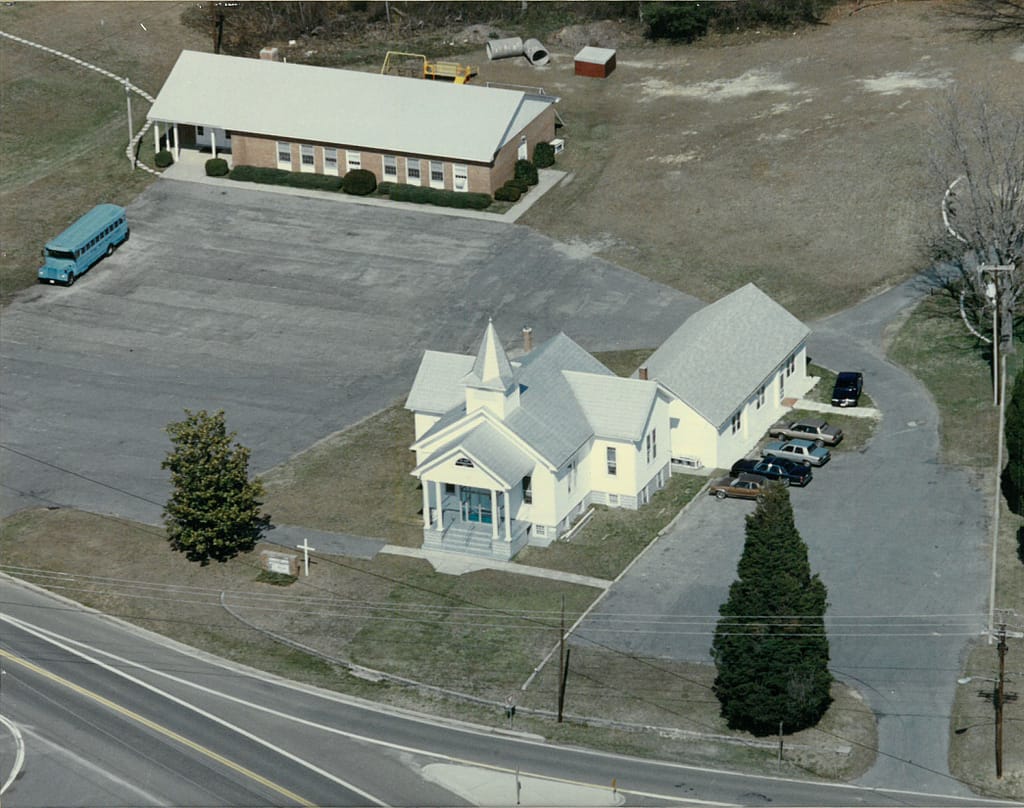
The late sixties and early seventies brought many changes to Methodism and to Calvert County. In 1968, the Methodist Church merged with the Evangelical United Brethren Church to become the United Methodist Church. In the County, the Calvert Cliffs Nuclear Power Plant was constructed, the Governor Thomas Johnson Bridge was opened, and the four-lane highway to Solomons was completed. This meant much growth for the County, and after much consideration, the church decided to become a single-station charge in 1980. A new parsonage was built on the north end of the property for the pastor’s family.
During the 1980s, the church continued to grow rapidly with the addition of more adult and children’s Sunday School classes, a second worship service, the SPUMPS preschool program and the revitalization of the United Methodist Youth Fellowship.
Growth continued, and in 1993, the Christian Life Center (CLC) was consecrated. The new facility featured an Activity Center (which could be described as a gymnasium with a stage), meeting rooms, an office suite, a library, a kitchen, and more classrooms. St. Paul was able to introduce a contemporary praise worship service in the CLC and add another traditional worship service in the Sanctuary, totaling three services available on Sunday mornings. With the need for additional education space, four new large classrooms were added onto the northeastern end of the CLC in 2002.
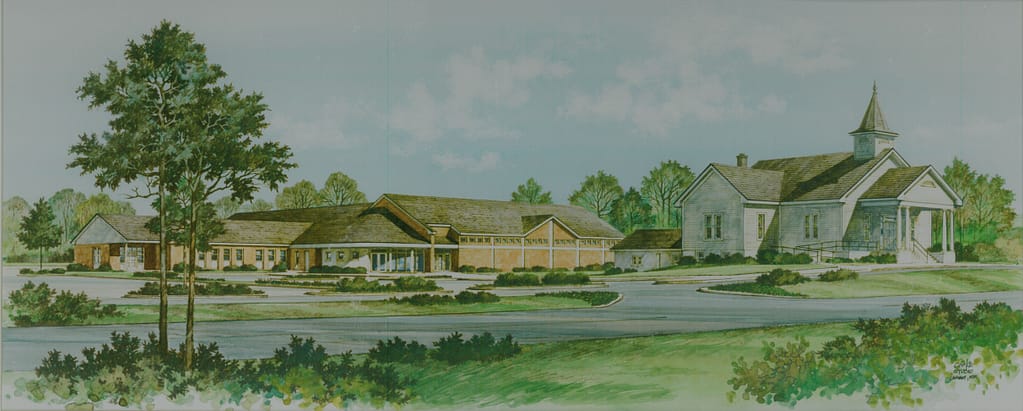
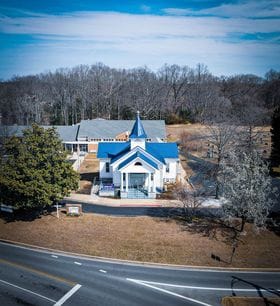

As Lusby grows with the construction of an industrial park located diagonally across from the church along with new shopping centers nearby in downtown Lusby, and as people relocate to support nearby U.S. Naval Air Systems Command (NAVAIR) at Pax River, St. Paul continues to be challenged by growth and opportunities. Most of all, St. Paul continues to be richly blessed by God and seeks to be a blessing to the community and world.